
The AI Act phases in by risk level: prohibited practices apply immediately, transparency obligations from August 2026, and full obligations for high-risk systems from December 2027. For personal use of open-weight models on a private VPS, there's an almost total exemption; in a business context, liability depends on the specific use case's risk level, not on whether the model happens to be open weight.
The AI Act's preamble
The AI Act (officially EU Regulation 2024/1689) governs the development, placing on the market, and use of artificial intelligence. The text faithfully follows the hierarchical structure typical of EU regulations, split between non-binding reasoning and binding provisions.
Before getting to the actual rules, the AI Act opens with no fewer than 180 “recitals” — the non-binding reasoning behind the law.
This massive introduction exists to explain in detail why Europe decided to act, laying out the law's ethical boundaries. The recitals justify the need to protect fundamental rights and democracy, and explain what the EU means by “unacceptable risk” or “high risk” before those categories turn into actual legal obligations.
The operative text: how the Chapters are organized
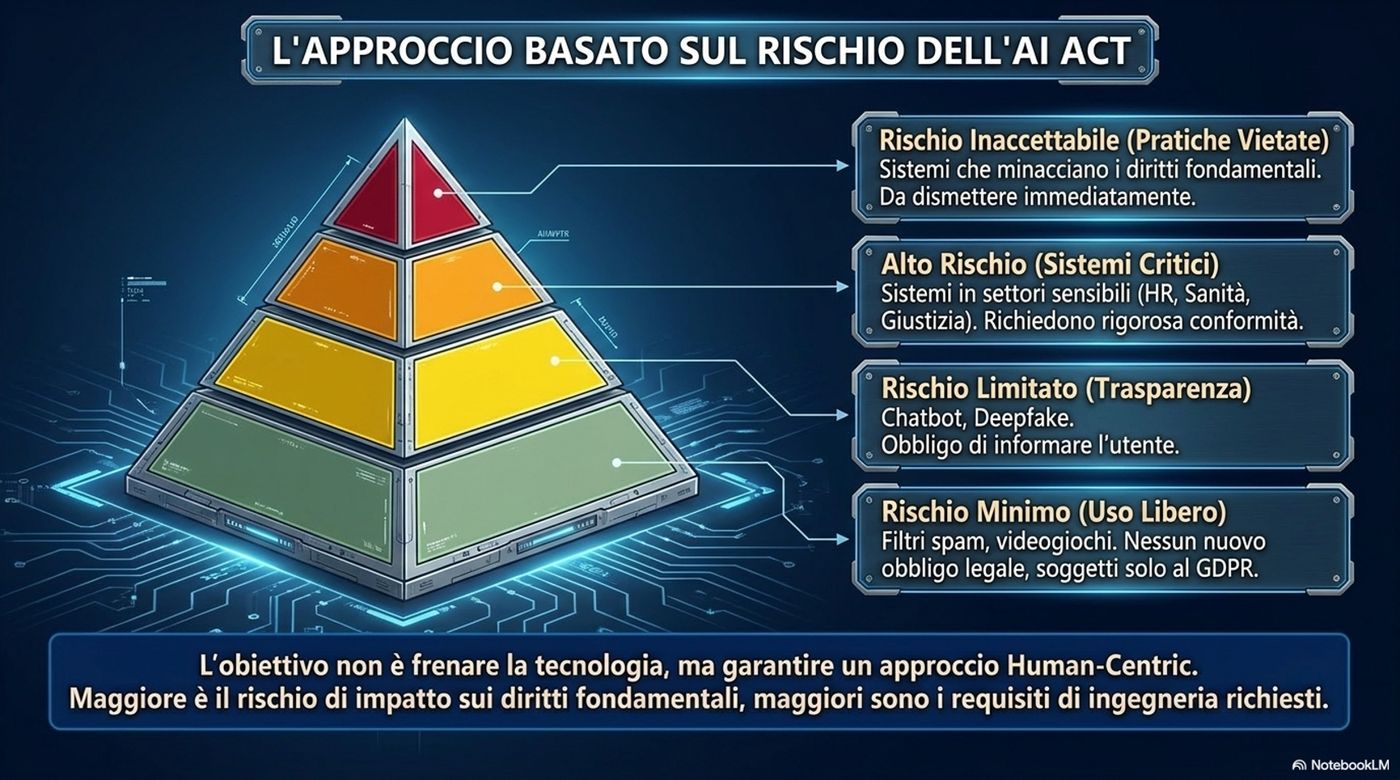
The regulation's binding core is made up of more than 110 articles, organized into thematic Chapters and Titles. This logical split divides up responsibilities between those who build AI and those who use it. The structure follows a risk-based pyramid:
- Chapter I — General provisions: subject matter, scope, and legal definitions (e.g., the precise definition of an “AI system”).
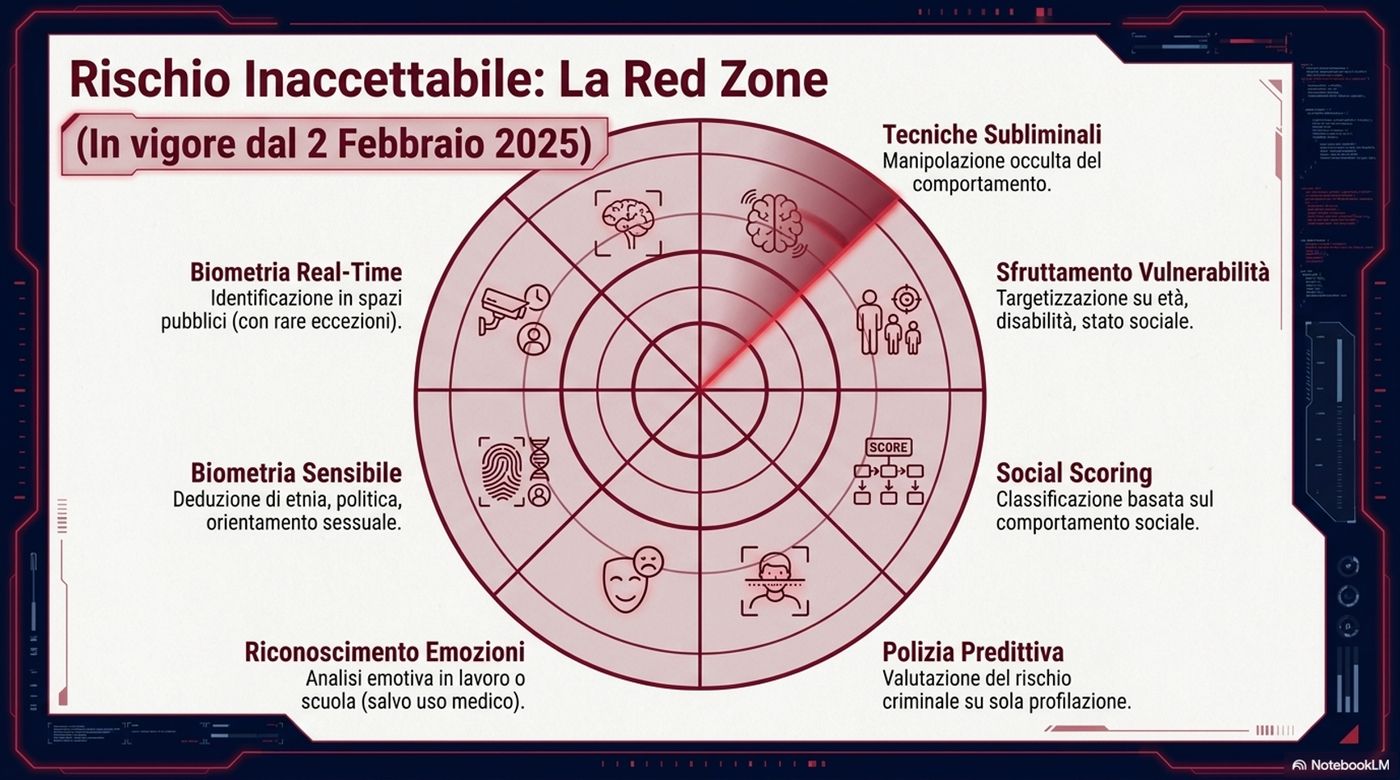
- Chapter II — Prohibited AI practices: lists unacceptable-risk systems that cannot be used in the EU (e.g., government-style social scoring or behavioral manipulation).
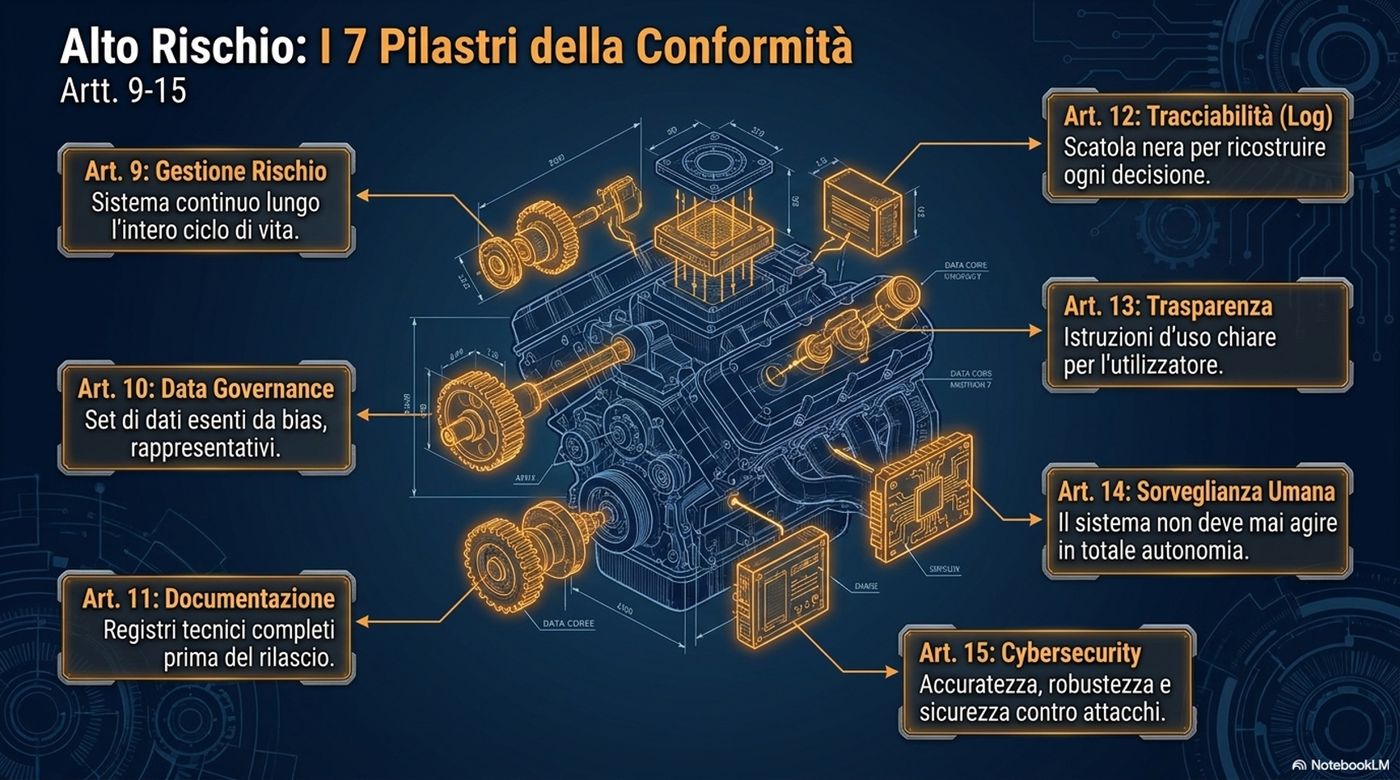
- Chapter III — High-risk AI systems: the heaviest section. It governs systems that are allowed but subject to strict compliance obligations, such as algorithms used in robotic surgery, personnel selection, or education.
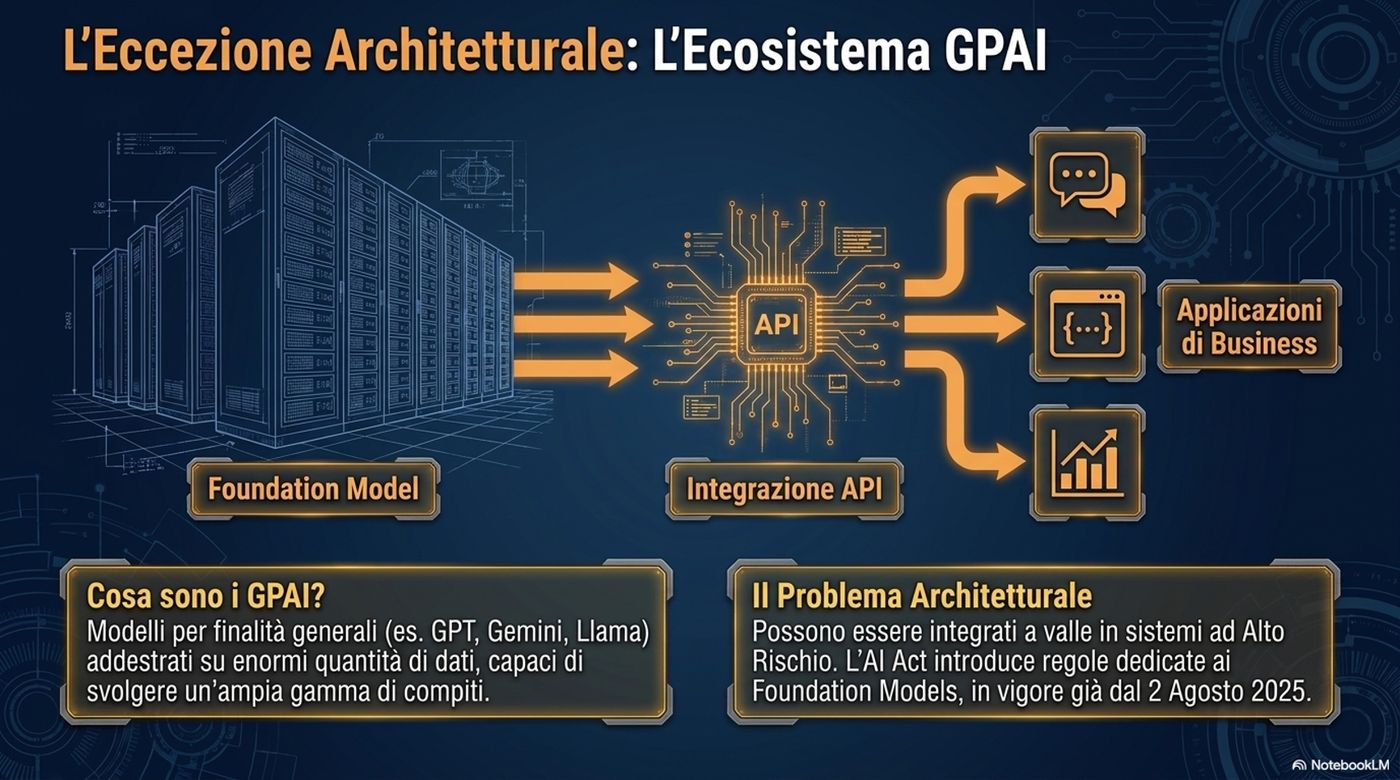
- Later chapters: cover general-purpose AI models (the so-called GPAI, such as the models behind ChatGPT), the duties of supervisory authorities, and financial penalties for rule violations.
The technical Annexes
The regulation closes with several Annexes essential to its practical application. They keep the main articles from getting bogged down: for instance, Annex I lists the Union's harmonization legislation, while another Annex precisely defines the list of systems considered “high-risk” (such as biometric systems or critical infrastructure), making future technical updates easier to roll out.
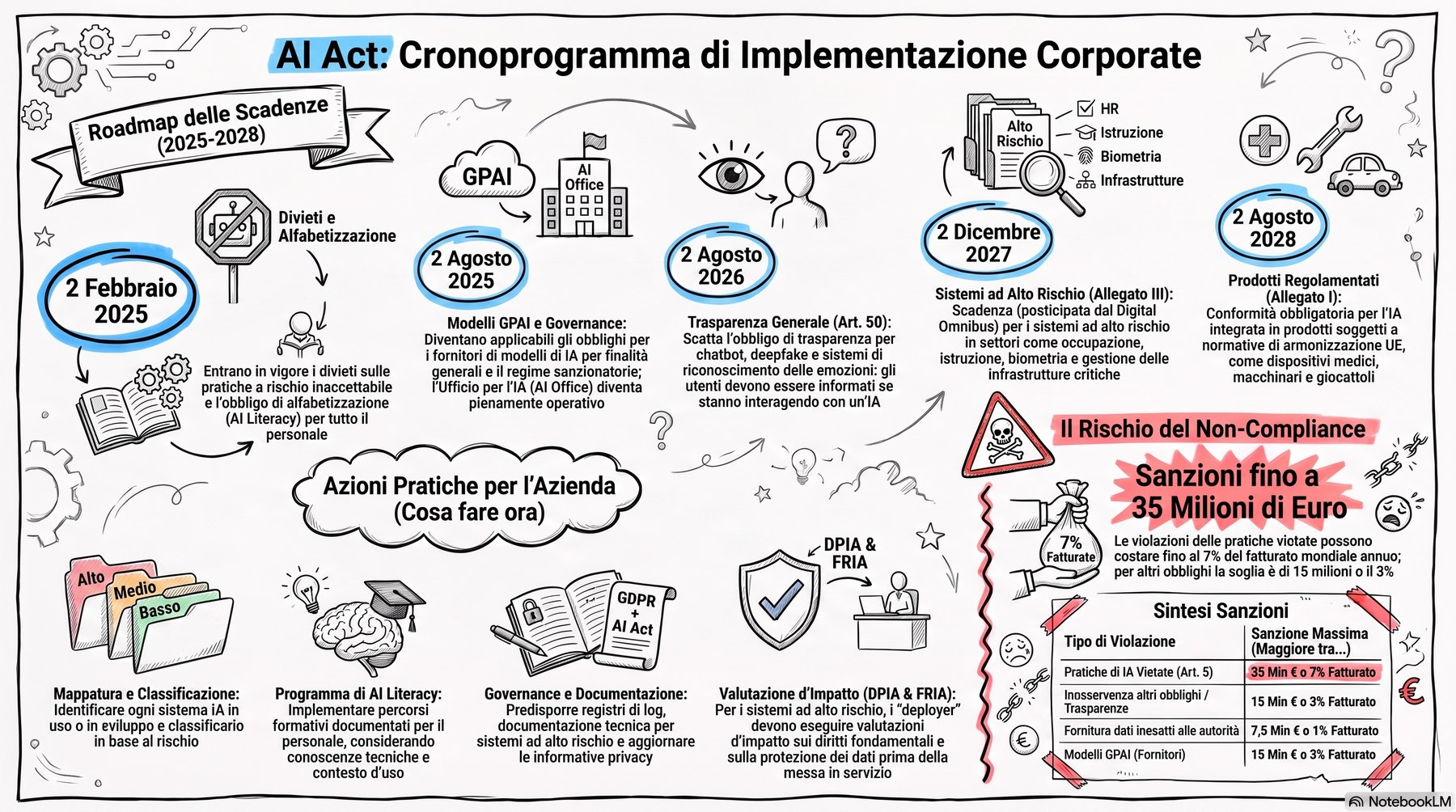
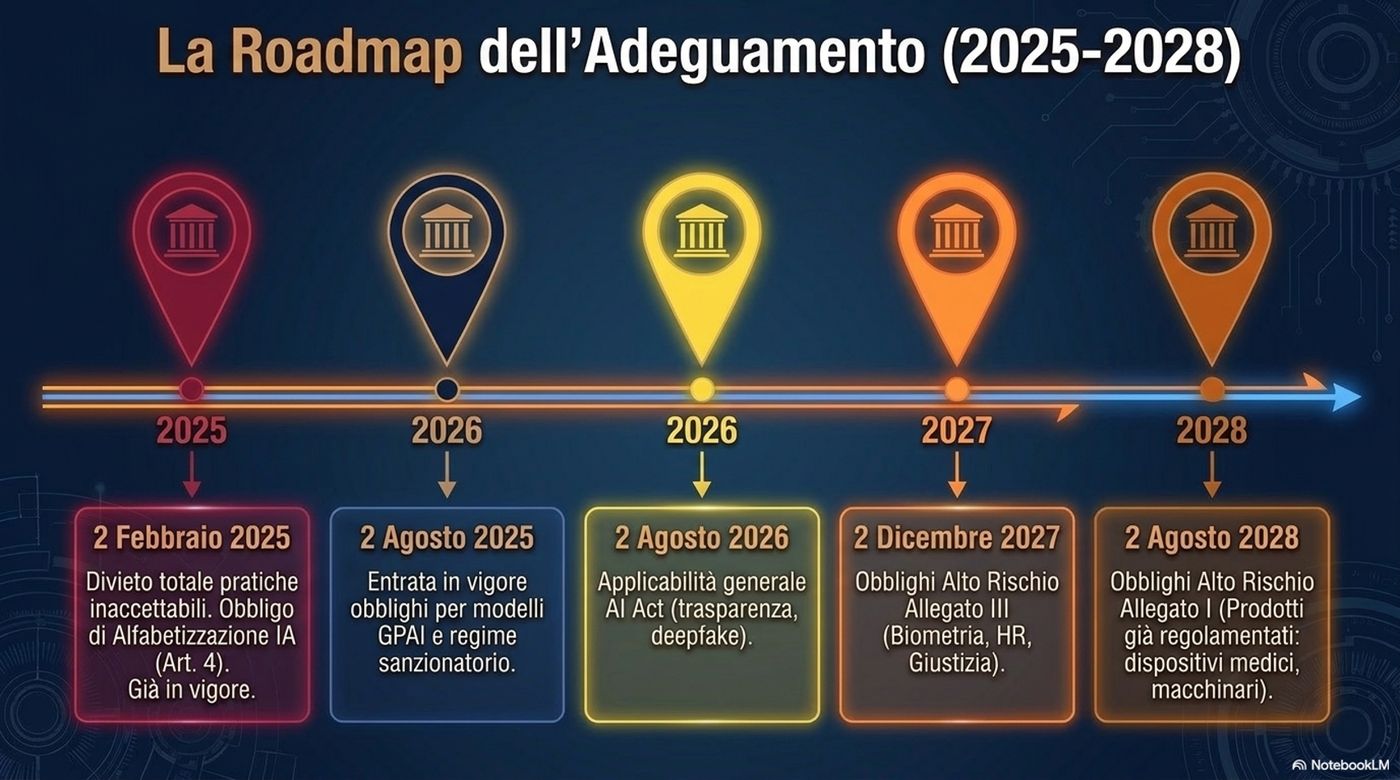
In terms of timing, the AI Act can be summed up like this:
Agents on a private VPS: what it actually means
Deploying agentic systems built on open-weight large language models (LLMs) run locally (via tools like Ollama) on a private VPS creates different liability profiles and limitations depending on the purpose (personal or business) and the sector of application. Below are the limitations and liabilities based on the AI Act's provisions.
1. Personal, non-professional purposes
For anyone building and using an agentic system for purely personal, non-professional purposes, the regulation provides an almost total exemption.
Article 2(10) explicitly states that the regulation doesn't apply to the obligations of deployers (users) who are natural persons engaged in a purely personal, non-professional activity. Other laws still apply, though — the GDPR for processing third parties' data, and ordinary civil/criminal law.
2. Business and professional purposes
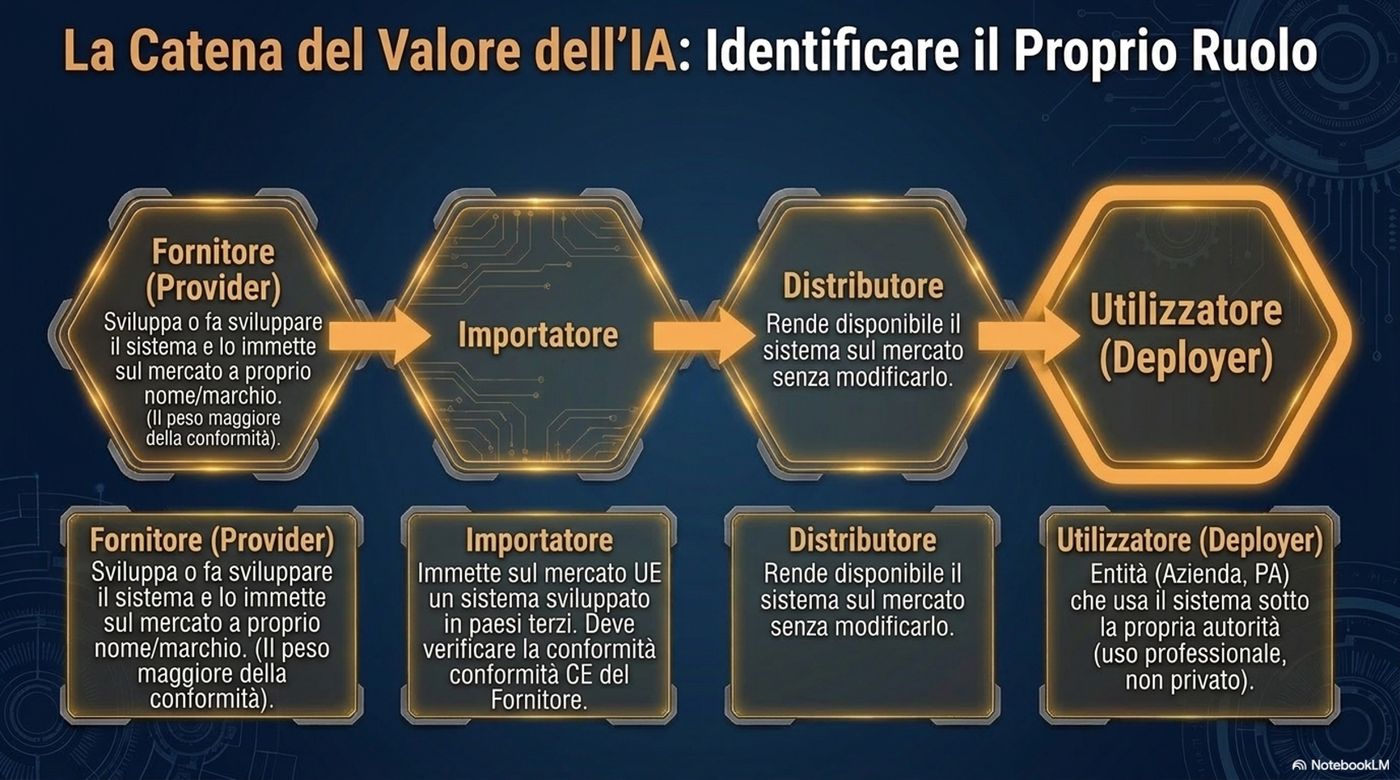
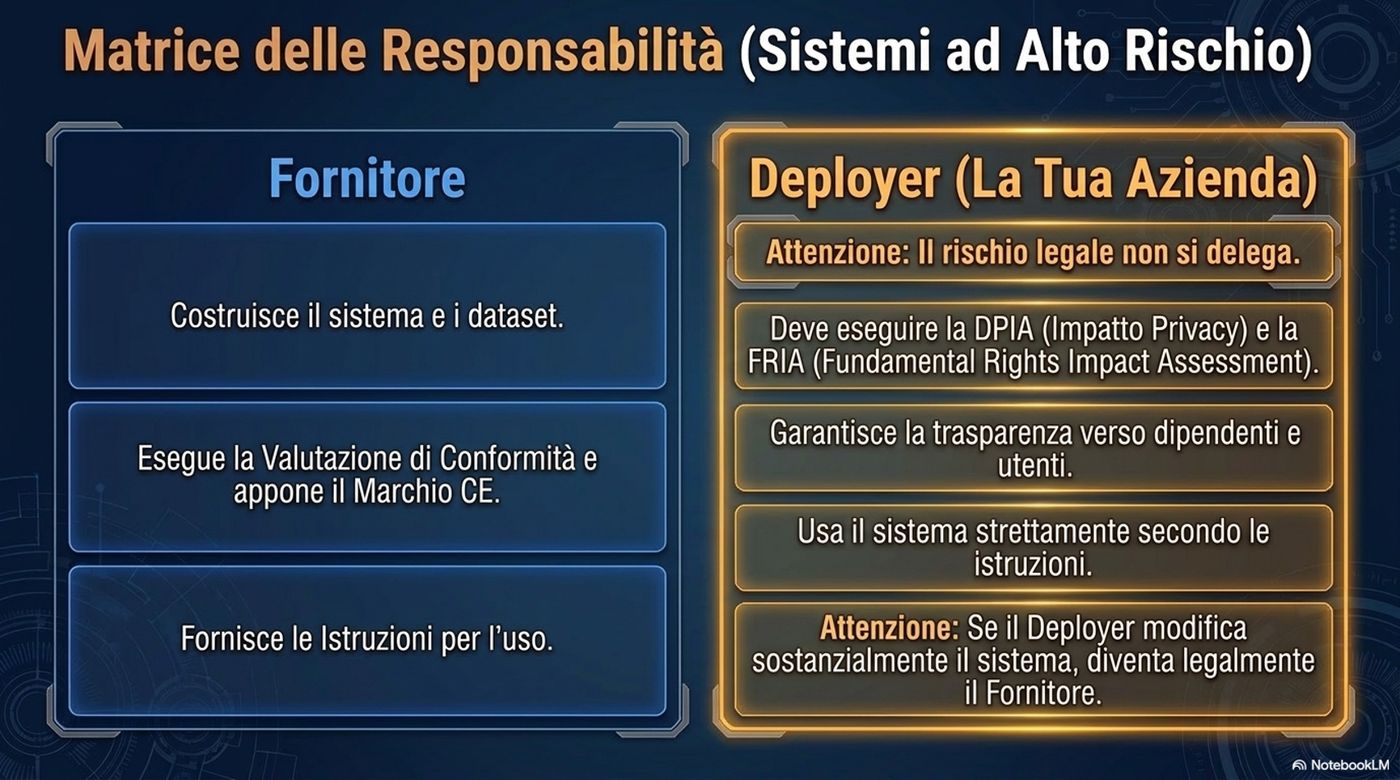
In a business context, the organization takes on the role of deployer (user) and, in certain cases — if it substantially modifies the model or places it on the market under its own brand — the role of provider.
Prohibited practices (Art. 5) — regardless of whether the model is open weight or runs on a private VPS, since February 2, 2025 it has been prohibited to use AI for:
Liability then depends on how the specific use case is classified by risk:
Personnel selection, credit, education, critical infrastructure
- Data governance: high-quality, representative, bias-free training/test sets
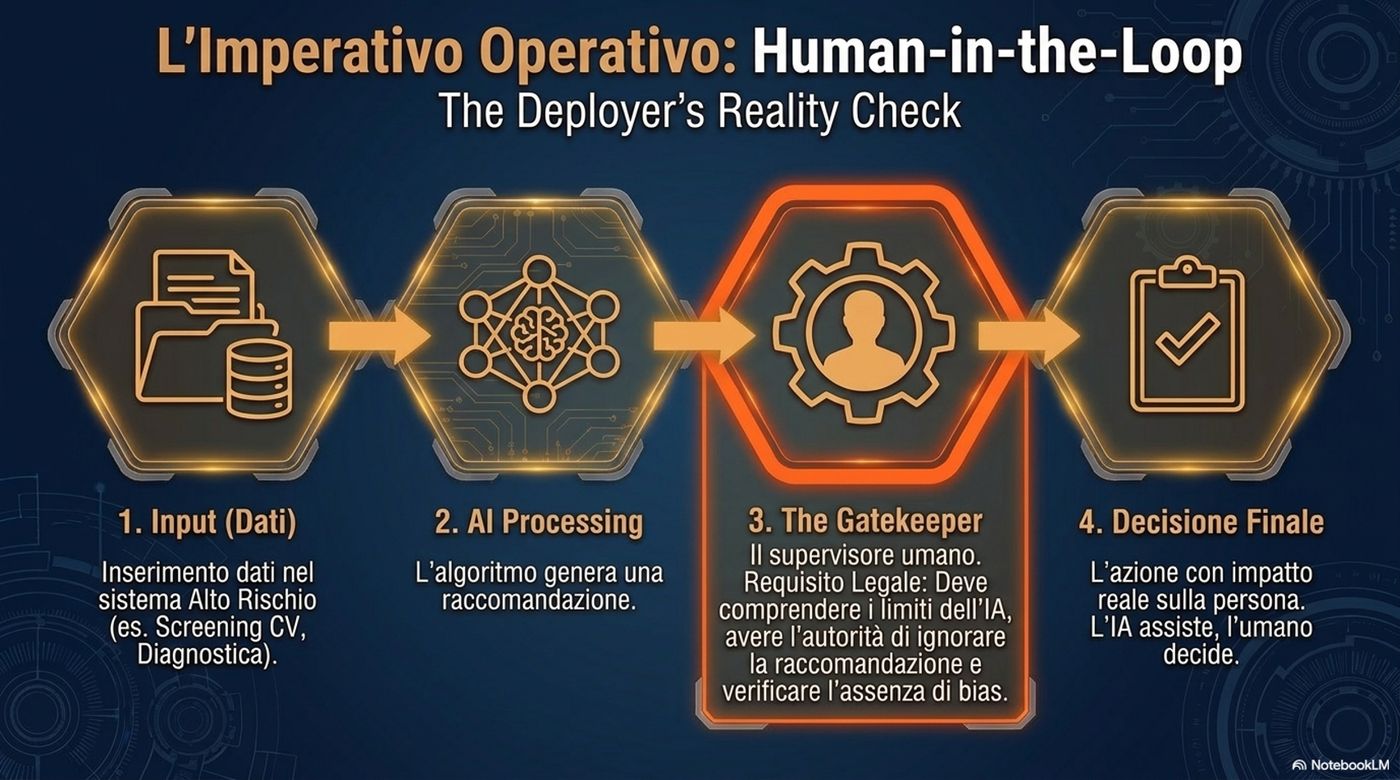
- Effective human oversight
- Technical documentation and automatic logs kept for at least 6 months
- Fundamental Rights Impact Assessment (FRIA) for public services or the financial/insurance sectors
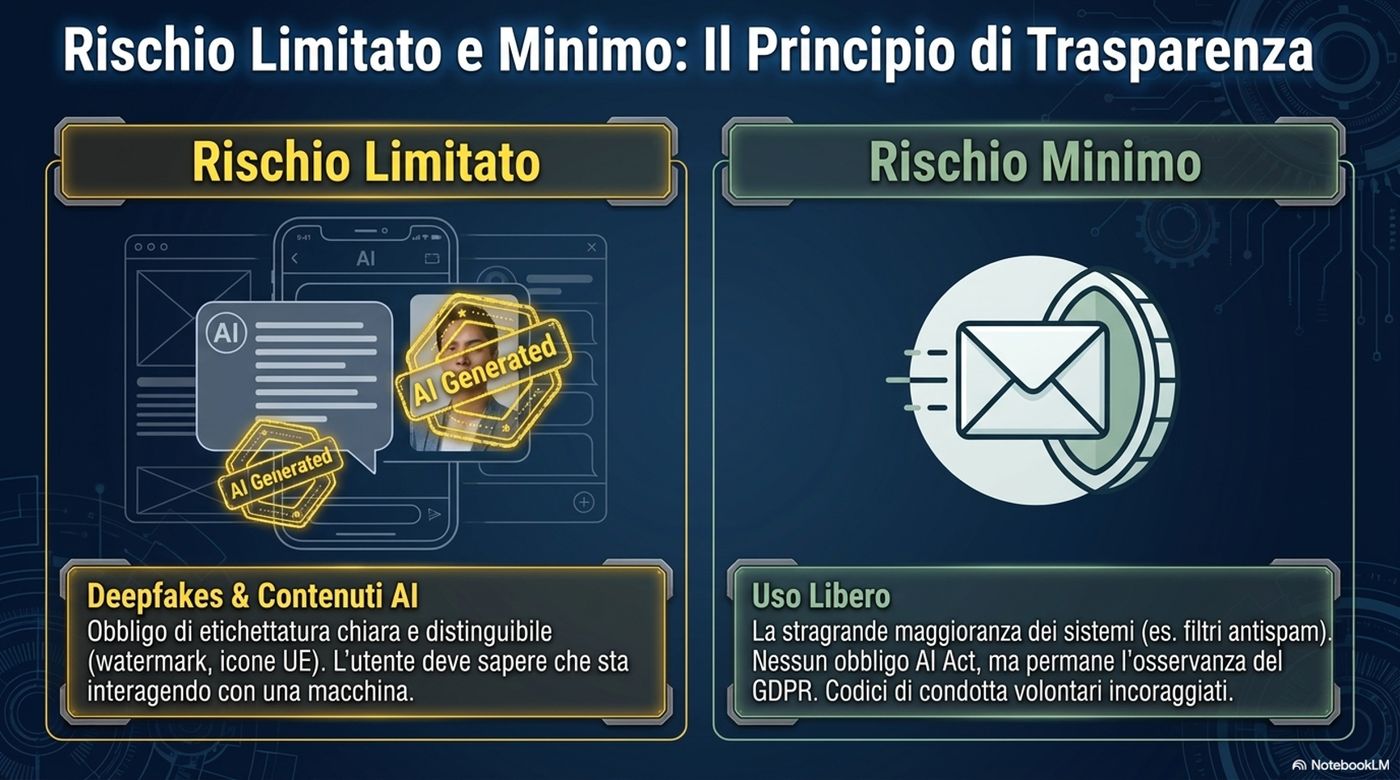
Virtual assistants and conversational agents
- Disclosure: stating that users are interacting with an AI
- Watermarking: synthetic content generated (text, images) must be marked in a machine-readable format
3. The impact of “open weight” and a private VPS
Using open-weight models and running them on private infrastructure directly affects the chain of liability.
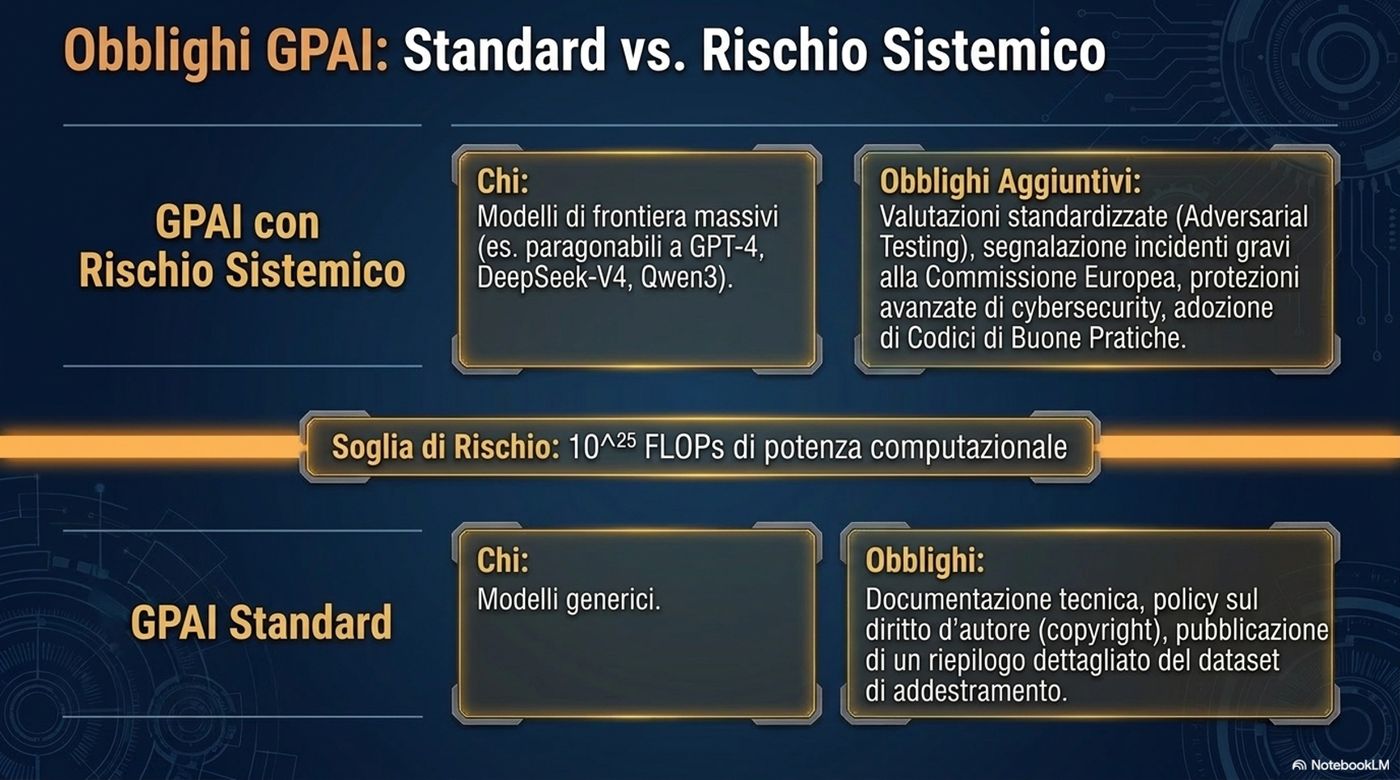
- Exemptions for open-source models (Art. 53): providers of freely licensed models (such as open versions of Llama or Mistral) whose weights are public are exempt from providing detailed technical documentation (Annex XI) and information to downstream providers (Annex XII) — unless the model poses a systemic risk (above 1025 FLOPs).
- Downstream provider liability: if a company integrates these models into its own agentic system, it becomes responsible for the final system's compliance. Since the original model's provider may be exempt from documentation, whoever deploys the system on a VPS has to independently analyze the AI's capabilities and limits for its own technical documentation.
- Cybersecurity: for high-risk systems, the company is responsible for the robustness and cybersecurity of the VPS infrastructure, to prevent attacks such as data poisoning or attempts to alter the model's behavior.
4. Compliance calendar
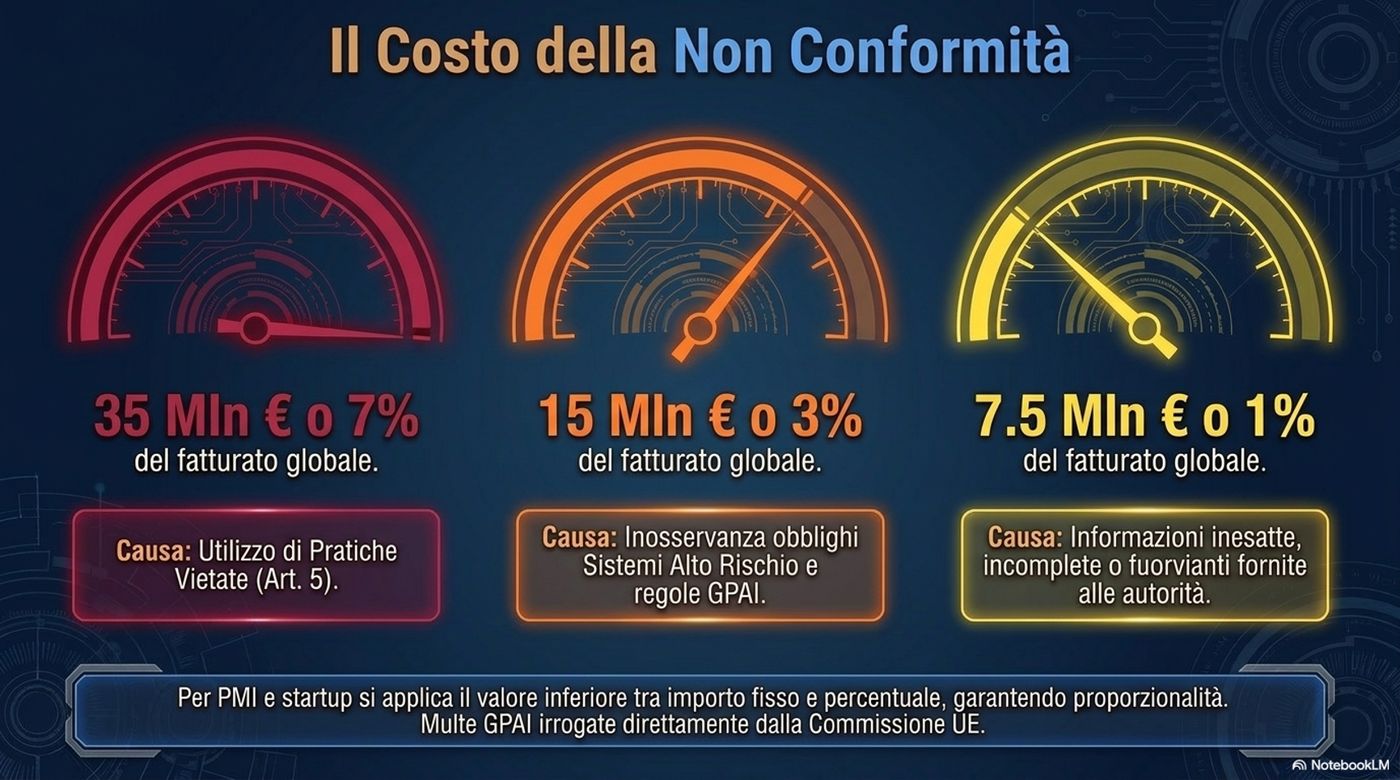
Companies need to track the following deadlines to avoid penalties, which can reach up to 7% of turnover:
Prohibited practices take effect, along with mandatory AI literacy training for staff.
General application of transparency obligations (e.g., chatbots).
Obligations for high-risk systems (Annex III), pushed back by the Digital Omnibus package.
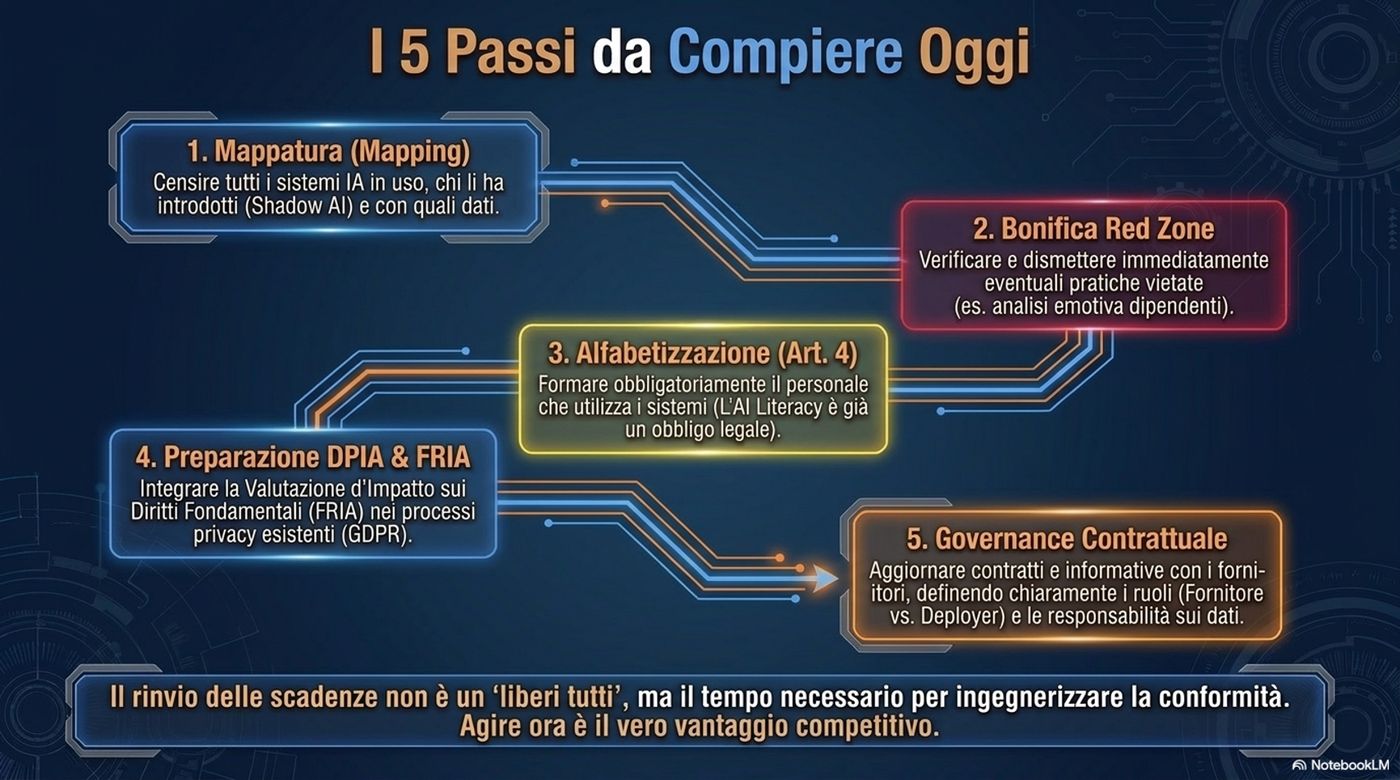
Some of the slides in the gallery below were created with NotebookLM (a Google trademark).

Click the image to enlarge it · arrow keys to navigate · −/+ to zoom · ⛶ for fullscreen · ⏸/▶ to pause/play